
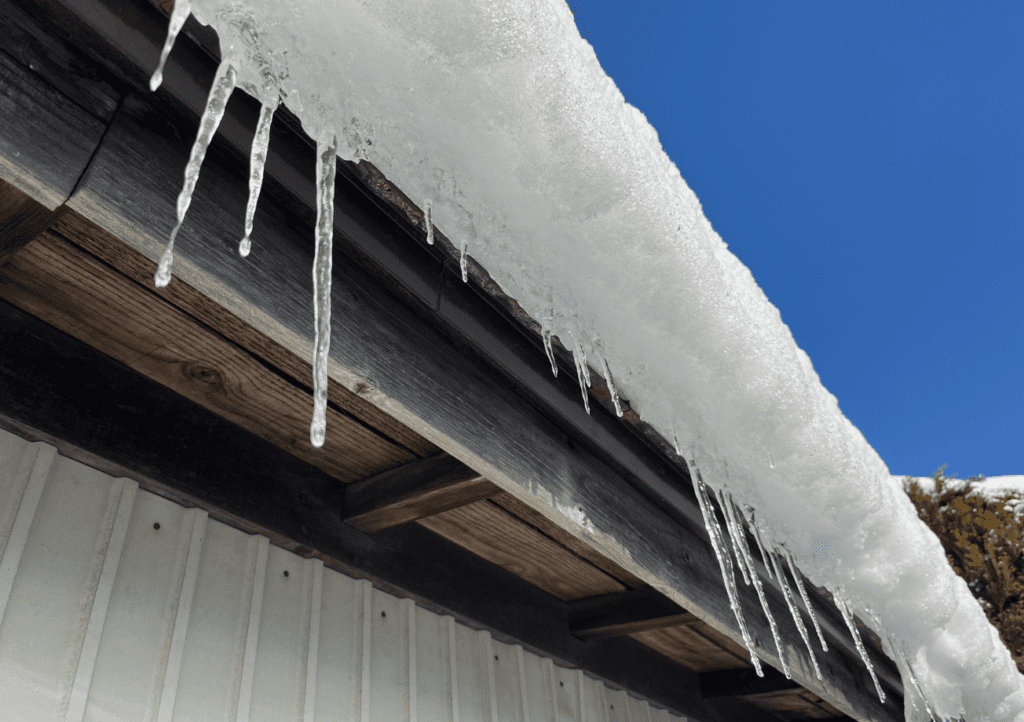
That ridge of ice along your roof edge isn’t just a winter nuisance. It’s actively forcing water into places your roofing system was never designed to handle. While you’re inside staying warm, ice dams may be saturating your roof deck, destroying your attic insulation, and creating conditions for mold growth that will cost thousands to remediate. Understanding how this damage happens helps you recognize the urgency of addressing ice dams before they compromise your home’s structure.
How Ice Dams Form From Poor Insulation and Heat Loss
Ice dams begin with heat escaping from your living space into your attic. When your attic lacks adequate insulation or has gaps around light fixtures, plumbing vents, and access hatches, warm air rises through these pathways and heats the underside of your roof deck.
This escaped heat warms the roof surface above it, melting snow even when outdoor temperatures remain below freezing. The critical detail is that this warming happens unevenly. The center portions of your roof directly above heated living space become warm enough to melt snow, while your eaves, which extend beyond your home’s thermal envelope, stay cold.
When melted water flows down the warm section of your roof and reaches the cold eaves, it refreezes. Each freeze-thaw cycle adds more ice to this ridge, gradually building a dam that blocks the natural drainage path off your roof.
Why Trapped Water Backs Up Under Shingles
Asphalt shingles are designed to shed water flowing downward, not to hold pooling water. When an ice dam blocks drainage, melted snow accumulates behind it with nowhere to go. This standing water doesn’t behave like rain running off your roof.
Pooled water finds every gap, seam, and nail hole in your roofing system. It works its way under shingle overlaps, penetrates through underlayment seams, and eventually reaches your roof deck. The process is relentless. As long as snow continues melting above and water has no drainage path, it keeps forcing its way into your roof assembly.
Unlike a typical roof leak that follows gravity straight down, water backed up by ice dams travels sideways and even upward through capillary action. This means damage can appear far from where the ice dam actually formed, making it difficult to trace the entry point.
The Damage Path: From Roof Deck to Living Space
Once water penetrates beneath your shingles, the destruction follows a predictable sequence. The first casualty is your roof deck. Plywood and OSB sheathing absorb moisture readily, and repeated wetting causes the wood fibers to swell, delaminate, and eventually rot. A roof deck that was structurally sound in fall can be dangerously compromised by spring.
From the decking, water travels along rafters and joists, spreading damage across areas you can’t see. It soaks into attic insulation, which loses effectiveness when wet and often must be completely replaced. The moisture-laden air promotes mold growth that can begin within 24 to 48 hours of water exposure.
Eventually, water reaches your ceiling drywall. You might first notice a yellow or brown stain, which indicates the damage has already been developing for some time. In severe cases, saturated drywall sags, paint bubbles and peels, and water actively drips into living spaces.
Long-Term Damage to Decking, Ceilings, and Attic Insulation
The consequences of ice dam water intrusion extend far beyond the immediate leak. Each element of your home that water contacts faces ongoing deterioration.
Roof decking that has been repeatedly soaked develops soft spots where sheathing no longer provides adequate support. Shingles installed over compromised decking won’t perform properly, and you may need full deck replacement before any roofing work can proceed. This transforms a shingle replacement into a significantly larger project.
Attic insulation that becomes saturated compresses and clumps, permanently losing its ability to resist heat transfer. Even after drying, the insulation never fully recovers its original R-value. This creates a cycle where your attic loses heat more easily, worsening the conditions that cause ice dams in the first place.
Ceiling damage often runs deeper than visible stains suggest. Water wicks through drywall, weakening the gypsum core and destroying the paper facing. Structural framing hidden behind walls and ceilings can develop rot that remains invisible until significant decay has occurred. Mold colonies established in these hidden spaces affect indoor air quality and require professional remediation.
Red Flags That Ice Dam Damage Is Already Happening
Watch for these warning signs that water may be infiltrating your home through ice dam activity. Icicles along your roof edge indicate the melt-freeze cycle is active. While small icicles are common, large formations or icicles appearing specifically after sunny days suggest significant water movement.
Inside your home, ceiling stains near exterior walls point directly to ice dam intrusion. Peeling paint or bubbling wallpaper in upper floor rooms signals moisture problems. Musty odors in attic spaces or upstairs rooms indicate mold growth may have begun.
In your attic, look for darkened or wet insulation, frost on the underside of roof sheathing, and any signs of water staining on rafters or decking. Insulation that appears compressed or matted has likely been wet and may need replacement regardless of whether it currently feels dry.
The Bottom Line: Assessing Your Risk
Your home faces ice dam risk if you have inadequate attic insulation, air leaks from living spaces into the attic, poor attic ventilation, or complex roof geometry with valleys and varying pitches.
Homes in the Hudson Valley experience exactly the conditions that create ice dams: cold enough for freezing, but with temperature swings that trigger repeated melt-freeze cycles. If your roof has experienced ice dams in previous winters, the underlying conditions haven’t changed on their own.
The cost equation is straightforward. Addressing attic air sealing, insulation, and ventilation costs a fraction of repairing water-damaged ceilings, replacing saturated insulation, remediating mold, and restoring rotted roof decking. The damage from a single severe ice dam season can exceed what prevention would have cost many times over.
Your Next Steps
If you’re seeing active signs of ice dam formation, document the extent of ice buildup and check interior spaces for any evidence of water intrusion. Avoid attempting to remove ice dams yourself, as improper methods can damage shingles or create injury risks.
Schedule a professional assessment of your attic insulation, air sealing, and ventilation before the next winter season. These evaluations identify the specific heat loss pathways feeding your ice dam problem.
For homes with visible interior damage or suspected roof deck deterioration, a roofing inspection determines whether structural repairs are needed before addressing the underlying causes. Catching damage early prevents the extensive restoration work that delayed action requires.