
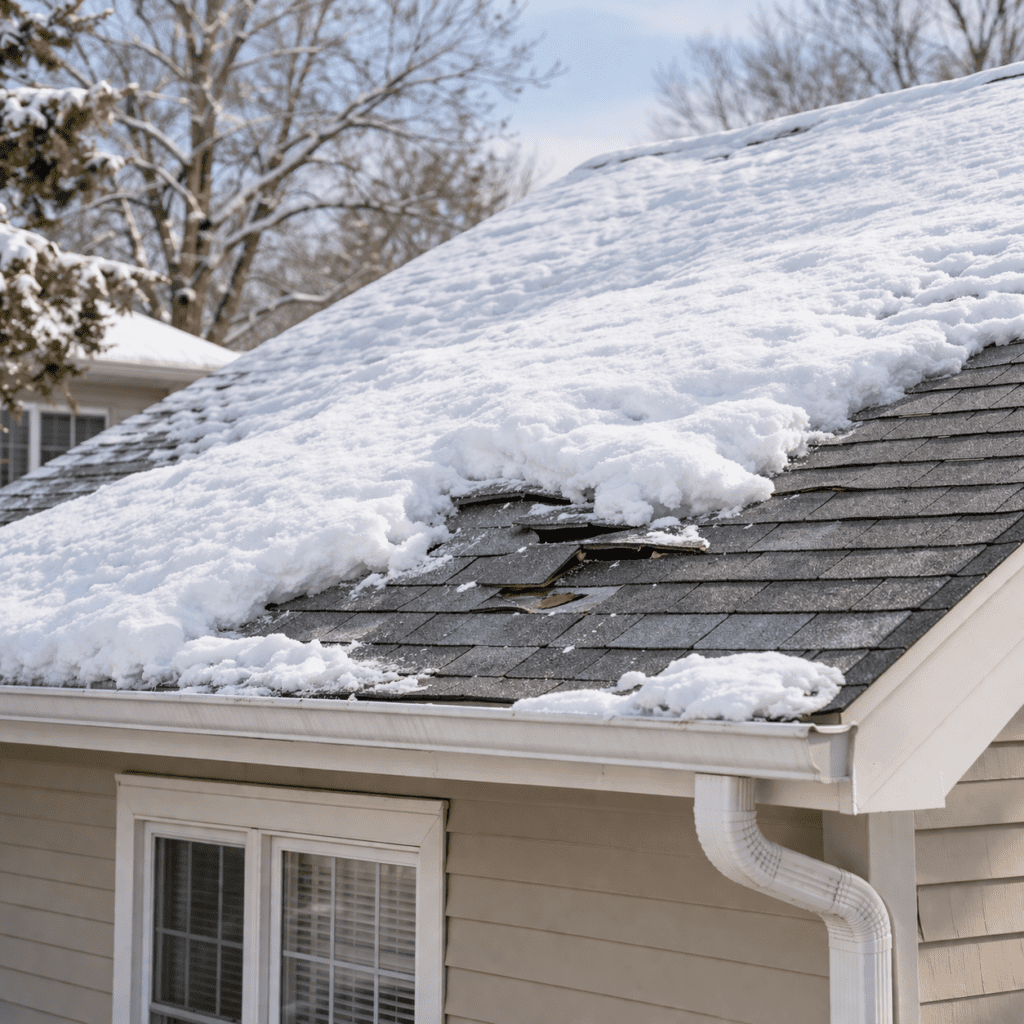
A blanket of snow makes any home look postcard-perfect. But that picturesque layer is also weight pressing down on your roof structure every hour it sits there. Most roofs handle typical snowfall without issue. Problems begin when accumulation exceeds what your roof was designed to carry—or when your roof’s condition has degraded since construction.
Knowing the warning signs and risk factors helps you act before snow becomes structural damage.
When Snow Buildup Becomes Dangerous
Most residential roofs can support approximately 20 pounds per square foot before experiencing stress. What does that translate to in actual snow depth? It depends entirely on snow type.
Light, fluffy powder weighs roughly 5 pounds per cubic foot. Your roof can handle about 4 feet of this dry snow before reaching stress thresholds. But Hudson Valley winters rarely deliver only powder.
Wet, dense snow weighs 15-20 pounds per cubic foot—four times heavier than powder. One foot of wet snow alone approaches your roof’s safe capacity. Two feet of heavy snow can exceed 40 pounds per square foot, pushing past design limits.
Ice creates the greatest concern. A single inch of ice equals approximately one foot of snow in weight. Ice-encrusted snow from freeze-thaw cycles weighs dramatically more than fresh accumulation of the same depth.
The danger compounds through multiple storms. Fresh snow falling on settled, compacted layers from previous storms creates combined loads far exceeding what depth alone suggests. Two feet of old snow plus two feet of new snow can reach 60 pounds per square foot—well beyond typical roof capacity.
Why Older and Flat Roofs Face Higher Risk
Roof pitch directly affects snow load risk. Steeper roofs shed snow naturally as it accumulates, preventing dangerous buildup. Each snowfall slides off before the next storm arrives.
Low-slope and flat roofs cannot shed snow. Every storm adds to existing accumulation. Without manual removal, these roofs carry the full winter’s snowfall simultaneously. Commercial buildings and homes with flat roof sections face significantly higher collapse risk than steep-pitched residential roofs.
Age compounds the problem. A roof built 30 years ago met codes for expected loads at that time. But decades of weather cycling, minor leaks, and material degradation reduce structural capacity. Rafters that handled design loads when new may fail at lower weights after years of moisture exposure and stress.
Previous damage matters too. A roof that survived a heavy snow year with minor sagging has already experienced structural stress. That same load in subsequent years may cause failure because the initial event weakened connections and members.
Homes with additions or modifications face particular risk. Adding dormers, skylights, or HVAC equipment changes load distribution. Cutting into rafters or removing structural elements during remodeling reduces capacity. These modifications may not have been engineered for combined dead load plus maximum snow load.
Warning Signs Your Roof Is Under Stress
Your home provides multiple signals when snow load approaches dangerous levels. Recognizing these warnings gives you time to act before failure occurs.
Visible sagging. Look at your roofline from the street. Any bowing, dipping, or visible deflection indicates structural stress requiring immediate attention. Compare to photos from previous years if available.
Interior ceiling cracks. New cracks appearing in drywall or plaster—especially near door frames or where walls meet ceilings—suggest the structure is shifting under load. Cracks that appear during or after heavy snow events warrant investigation.
Doors and windows sticking. When roof structure sags, it distorts wall framing throughout your home. Doors that suddenly won’t close properly or windows that bind indicate the house frame is under stress.
Unusual sounds. Creaking, popping, or cracking sounds from your attic or ceiling during heavy snow indicate structural members straining under load. These sounds demand immediate action—not investigation, but evacuation and professional assessment.
Sprinkler deflection. If you have fire suppression sprinklers visible below drop ceilings, watch for sagging. Sprinkler heads that have dropped below ceiling level indicate significant structural deflection.
Multiple warning signs appearing together indicate emergency conditions. Move people away from affected areas and contact a structural professional immediately.
What To Do When Snow Accumulates
After major storms, assess accumulation depth and type. Use a yardstick from a window or safe vantage point—never climb onto a snow-loaded roof.
For concerning accumulation on pitched roofs, a roof rake operated from ground level can remove snow from lower roof sections and eaves. Focus on clearing the first several feet from edges where ice dams form and where added removal reduces overall load.
Flat roof sections require professional snow removal when accumulation approaches 12-18 inches of wet snow or when any warning signs appear. The cost of professional removal is minimal compared to structural repair or collapse consequences.
Never attempt to remove snow while standing on the roof itself. Snow-covered surfaces hide hazards, and the roof structure may already be compromised. Professional crews have equipment, training, and insurance for this dangerous work.
Prevention Starts Before Winter
Fall roof inspections identify vulnerabilities before snow arrives. A professional assessment evaluates structural condition, identifies previous damage, and flags concerns about load capacity.
Attic inspections reveal early structural stress invisible from outside. Cracked rafters, bowing beams, and stressed connections indicate reduced capacity requiring reinforcement before winter loads arrive.
Addressing drainage ensures melting snow exits efficiently. Clean gutters, functional downspouts, and clear drainage paths prevent water backup that adds ice weight to already stressed structures.
For flat roof sections, consider snow removal planning before storms arrive. Identifying contractors, establishing triggers for calling them, and budgeting for removal prevents dangerous accumulation.
The Bottom Line
Snow load rarely causes sudden catastrophic collapse in well-maintained homes. But cumulative damage from overloaded winters, combined with structural degradation over decades, creates conditions where the next heavy storm becomes the one that causes failure.
Watch for warning signs during and after major snow events. Understand that wet, heavy snow and ice create loads far exceeding what fluffy powder suggests. Recognize that older roofs, flat sections, and previously stressed structures face elevated risk.
Your Next Steps
Schedule a fall roof inspection that includes structural assessment, not just surface condition. Ask specifically about load capacity concerns.
After major storms, check your roofline for sagging and your interior for new cracks. Listen for unusual sounds from your attic.
If warning signs appear, evacuate affected areas and contact a professional immediately. Structural failure gives little warning once it begins.
For flat roof sections or homes with previous snow load concerns, establish a snow removal plan before winter arrives.